Showing posts with label health-tips. Show all posts

Guide to Make Cheap and Healthy Potato Chips

Guide to Make Cheap and Healthy Potato Chips


I think almost everybody likes potato chips. This is something that more American are Natural meal. I thought I would like to share my way to make my own potato chips. It is cheaper, little fat, more flavor, and more yummy plus you also can make it at any kind of flavor that you like to. It is healthier and also tastier because it is baked, and not deep fried. You know that baked chips are very expensive if you buy in stores, but now you can make it cheaper. Here are the guide to make Cheap and Healthy Potato Chips

  1. First, you can buy some potatoes. I like to use the small ones, but you may use whatever you like. Explore to get which ones you like most.
    Get some potatoes


  2. Don't forget to wash the potatoes. Then peel them if you like to, but I prefer to leave the skin on.
    Wash your potatoes


  3. Slice those potatoes between one eighth and one sixteenth inch thick (about 2 - 6mm), use mandolin if you like. Thickness is something that you can experiment with, it's mostly preference, but it has a pretty big effect on cooking time.
    Slice the potatoes


  4. Put all of your sliced potatoes into a bowl. Add about a teaspoon of your favorite oil (I like olive oil).
    sliced potatoes


  5. Toss the potato slices in the oil. Slowly add more oil and toss if you need to. Go with about a teaspoon at a time. Only add enough to coat, if you have oil pooling in the bottom of the bowl, you have added too much.
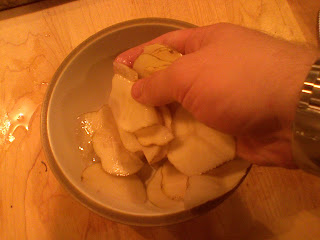
    Toss the potato


  6. Get a baking pan and cover it with aluminum foil. Spray that foil with your favorite non-stick spray. If you don't the chips will stick, and will be really hard to remove.
    baking pan


  7. Lay your oil-coated potato slices in a single layer on the baking sheet.


  8. Heat your oven to 400 degrees (F), set the timer for twenty minutes. This isn't the total cooking time, since we will watching them to see when they are done.


  9. Put the potatoes into the oven and keep an eye on them. They are done when the edges start to curl up. I like mine a little more crispy, so I left mine in a little longer. It's another personal preference thing that you can play around with.


  10. When the chips are done, pull them out and set them aside to cool. If you want to put some seasoning on them, this is the time to do it. Most people will add a little salt, but you can get creative with your toppings. I like mine with some black pepper and Old Bay seasoning..
  11. Enjoy your cheap and healthy potato chips!


Guide to Quit Smoking Naturally


Guide to Quit Smoking Naturally


Want to Quit Smoking Naturally?
If your are seriously want to quit smoking naturally, first, You must promise to yourself that you will not smoking again for goodsake. I know it's hard to giving up the things you do often in your daily day.

But no need to worry, you are not alone. There are more than 1 million people every year want and decide to quit smoking and they are success quit smoking naturally.

Have You Tried Quitting Before?
I have lots of friends who's trying to quit smoking again and again but never work out. You probably have tried so many time to quit, but it always failed. Perhaps you started to feel like the time was right, but for whatever reason, then you're smoking again. Now, you're asking whether it's worth it to try quitting again. You bet it is!

Quit smoking is hard, but hey.. don't give up!

Several smokers try so many times before they quit smoking for good. The Studies prove that everytime people try to quit, the more likely they will be to finally succeed. With every try, you are better able to know what helps and what hurts. Any effort to quit is a step in a healthier way.

Are you Pregnant?
If you are pregnant, then there's no better time to quit.

There are two very good reasons for you to quit smoking:

  • Your self
  • Your baby


Even if somebody you know smoked near you when you're pregnant and then you had a problem, smoking will puts your baby's health at risk. Quit smoking at any time when you're pregnant is the best time for you and your baby to get a new start.

It is also really important for you to remember that babies and children exposed to second-hand smoke are more likely to develop health problems such as chronic ear infections and asthma. Helping to eliminate these health risks is another good reason to quit smoking. If you don't want to quit for your self, at least quit smoking for your baby!

How Do I Start to Quit Smoking Naturally?

First, you need to make a plan. You may want to:

  • Consult a health care professional to choose a quit smoking plan that is best for you.
  • Set a quit date and stick to it.
  • Get the support and understanding of your family, friends, and co-workers.
  • Get rid of all tobacco products and ashtrays.
  • Get Support and Encouragement


U.S. Public Health Service (PHS)-funded research shows the more support you have, the greater your chance for success.

Join a quit smoking program or start your own quit smoking group. Check with your health care professional, local hospitals, the American Cancer Society, American Lung Association, or American Heart Association for schedules for existing groups.

Learn How to Handle the Urge to Smoke

Be aware of the things that may cause you to smoke, such as:

Other smokers.

Stress.

Depression.

Alcohol.


What Works?

Current treatments
There are no magic solutions for quitting smoking. But, if you are ready to quit, effective treatments are available that can help reduce the urge to smoke.

Studies show that almost everyone can benefit from these nicotine and non-nicotine replacement therapies.
  • Nicotine Replacement Therapy
  • Nicotine patch.
  • Nicotine gum.
  • Nicotine nasal spray.*
  • Nicotine inhaler.*
  • Non-Nicotine Therapy
  • Bupropion SR.*


Guide And Information About Diabetes


Guide And Information About Diabetes


General Information about Diabetes
Affected Pancreas Safe, Good in Early Study
An "artificial pancreas" created to carry the main blood sugar-influencing hormone insulin to diabetic patients with no need to inject. This has been found good and safe also effective in a preliminary study case with 10(ten) patients of diabetes.

The device is an insulin source, implanted in the tissue paper facing the abdominal cavity and connected to a sensor implanted in the jugular vein. The source needs insulin refills each month or so. When the sensor finds a growth in blood glucose, the source carries the required amount of insulin. Below are some guide and diabetes information.

Blood Glucose Testing
Most insurances now pay for diabetics to have blood glucose monitoring equipment in the home. Keeping the machines clean and in good working order are vital for accurate results. Follow the manufacturers' instructions for proper cleaning and maintenance.

Blood Glucose Testing Tip
Be sure hands are clean before performing the test, but don't use alcohol to cleanse your fingertip. It's drying and may cause fingertips to crack. Wash hands with a mild antibacterial soap like Dial.

Diabetes Test After Heart Attack Shows Future Risk
Examining patients who experience had heart attacks for signals of diabetes before they leave the hospital probably describe those with the highest risk of the next heart attacks. Some people hospitalized for a heart attack have undiscovered diabetes or prediabetes, a condition coined to identify the millions of obese and overweight people who have blood sugar levels advising an increased risk of full-blown diabetes. Medications, work out and change your diet habit, all of which can reestablish normal glucose levels, and perhaps can cut the risk of heart attacks in patients who have already had a heart attack.

Diabetic Dental Care
Immaculate mouth care is a must. Diabetics are much more prone to gum disease. More frequent dental visits may be needed and careful brushing and flossing are a necessity. Avoid ill-fitting dentures that may cause mouth sores.

Diabetic Eye Care
If you're a diabetic, regular visits to your eye care professional are a must to prevent problems that could lead to blindness.

Diabetic Foot Care Tips
  • Take the pressure off your feet by losing weight if you are obese.
  • Inspect your feet at least once per day. If you can't see well, ask someone to do it for you.
  • Wash feet with mild soap and lukewarm water daily.
  • Wear white cotton socks rather than synthetic ones with dyes.
  • Don't go barefoot or wear ill-fitting shoes.
  • See a podiatrist regularly for toenail trims and other routine maintenance.


Diabetics Are Prone to Foot Problems
Diabetics have decreased sensation and circulation in their feet making them prone to foot infections/wounds that could eventually lead to amputation.

Drug Could Delay Diabetes
Acarbose, a drug that blocks the digestion of starch, could prevent or delay the development of the most common form of diabetes in those with slightly high blood sugar.

Exercises to Avoid
Diabetics should avoid exercises that involve pushing or pulling heavy objects and lifting weights. Blood sugar levels and blood pressure are raised during this kind of exercise.

FDA Approves New Sweetener Neotame
A non-nutritive sweetener said to be 7,000 to 13,000 times sweeter than sugar received approval from the U.S. Food and Drug Administration to be marketed as an additive in candies, soft drinks and various other products.

Like the other common sweeteners, Neotame is a white crystalline powder that melts in water. It is created by Monsanto, which also creates NutraSweet's sweetener Equal. Neotame iaccredited for use in baked goods, nonalcoholic beverages, chewing gum, confections, frozen desserts, gelatins and puddings, jams, jellies, fruit, juices, toppings and syrups.

The FDA declared the product to be secure for use after analysing to more than 113 animal and human studies, many people of which seen at any possible links with cancer-causing or neurological side effects.

Inhaled Insulin
Inhaled insulin may soon offer an alternative to needles for people with diabetes.
Novo Nordisk, a Denmark-based company, has ongoing clinical trials to test the safety and effectiveness of an electronic pulmonary insulin system. They say it may be available in the United States and Europe within a few years.
This is the first electronic pulmonary insulin system currently being tested in clinical trials. It works by converting a special liquid insulin into aerosol particles, which are inhaled into the lungs.

Regular Exercise Is a Must
Exercise is extremely important for diabetics as it strengthens the cardiovascular system, increases circulation to the arms and legs and helps control blood sugar levels. Walking, jogging, rowing and swimming are best.

Shoes for Diabetics
  • Avoid plastic shoes and waterproof shoes. They encourage perspiration and fungal growth.
  • Avoid tight or unventilated footwear.
  • Don't wear boots all day.
  • Choose cotton or leather shoes.
  • Wear sandals as much as possible in the summer.
  • Don't wear the same shoes two days in a row.
  • Air shoes in the sun to inhibit fungal growth.


Small, Frequent Meals
Diabetics should follow their American Diabetic Association diet and eat small meals more frequently such as three small meals with one or two healthful snacks between meals. This helps maintain a more stable blood sugar level.

Treatment of Hyperglycemia
Some symptoms of hyperglycemia (high blood sugar) are: excessive urination, weight loss, excessive hunger and thirst. If you are experiencing any of these symptoms, you should see your doctor.

Treatment of Hypoglycemia
Some symptoms of hypoglycemia (low blood sugar) are: cool, clammy skin, numbness of the mouth, a fluttering in your chest, hunger and feeling faint. Emergency treatment includes ingesting something containing sugar like orange juice, a candy bar, or sugared soda pop. Follow that with some cheese or peanut butter crackers to sustain your blood sugar level.

What's an Exchange?
In a switch diet, foods that are alike are classified together. Serving sizes are good defined, so that each will have the identical amount of carbohydrate, fat, and protein like any other. Foods can be "Switched" or traded with others in a category while still gathering the desirable general goals. Switches can be applied to most any eating condition and probably make it easier to follow a healthy diet. For example, if a nutrition plan calls for one starch exchange a person could choose 1/2 cup of cooked pasta, OR one slice of bread, OR a small (3 oz.) baked potato.

Guide to Joyful Yoga


Guide to Joyful Yoga


If you want relax and joyful yoga, this yoga techniques video can help you to find your inner peace. Find out how you can get a bit of relax following these easy steps, watch this video and practice this guide to Joyful Yoga.


At Home Yoga Guide


At Home Yoga Guide


Yoga is an ancient physical and spiritual practice originating in India which combines the practice of exercises, called asanas, with breathing and meditation. Yoga helps to relax, can improve your physical health and also your mental health. There are many reasons for practising this technique, and now you can practice at home yoga, and for free.

At home yoga video is a basic yoga exercise, with many benefits for your body and mind. Learn here the salute to the sun and start pracising now.


Guide of Yoga Practice


Guide of Yoga Practice


Here you can watch a basic guide of yoga practice to exercise anywhere you want. In yoiga practice video are combines breathing with exercise and meditation.

This video guide of yoga practice are appropriate for beginners, so start now to practice yoga at home, improve your health and relax.


Guide to Essential Health


Guide to Essential Health


1. Move More
Make it a daily challenge to find ways to move your body. Climb stairs if given a choice between that and escalators or elevators. Walk your dog; chase your kids; toss balls with friends, mow the lawn. Anything that moves your limbs is not only a fitness tool, it's a stress buster. Think 'move' in small increments of time. It doesn't have to be an hour in the gym or a 45-minute aerobic dance class or tai chi or kickboxing. But that's great when you're up to it. Meanwhile, move more. Thought for the day: Cha, Cha, Cha…. Then do it!

2. Cut Fat
Avoid the obvious such as fried foods, burgers and other fatty meats (i.e. pork, bacon, ham, salami, ribs and sausage). Dairy products such as cheese, cottage cheese, milk and cream should be eaten in low fat versions. Nuts and sandwich meats, mayonnaise, margarine, butter and sauces should be eaten in limited amounts. Most are available in lower fat versions such as substitute butter, fat free cheeses and mayonnaise. Thought for the day: Lean, mean, fat-burning machine…. Then be one!

3. Quit Smoking
The jury is definitely in on this verdict. Ever since 1960 when the Surgeon General announced that smoking was harmful to your health, Americans have been reducing their use of tobacco products that kill. Just recently, we've seen a surge in smoking in adolescents and teens. Could it be the Hollywood influence? It seems the stars in every movie of late smoke cigarettes. Beware. Warn your children of the false romance or 'tough guy' stance of Hollywood smokers. Thought for the day: Give up just one cigarette…. the next one.

4. Reduce Stress
Easier said than done, stress busters come in many forms. Some techniques recommended by experts are to think positive thoughts. Spend 30 minutes a day doing something you like. (i.e.,Soak in a hot tub; walk on the beach or in a park; read a good book; visit a friend; play with your dog; listen to soothing music; watch a funny movie. Get a massage, a facial or a haircut. Meditate. Count to ten before losing your temper or getting aggravated. Avoid difficult people when possible. Thought for the day: When seeing red, think pink clouds….then float on them.

5. Protect Yourself from Pollution
If you can't live in a smog-free environment, at least avoid smoke-filled rooms, high traffic areas, breathing in highway fumes and exercising near busy thoroughfares. Exercise outside when the smog rating is low. Exercise indoors in air conditioning when air quality is good. Plant lots of shrubbery in your yard. It's a good pollution and dirt from the street deterrent. Thought for the day: 'Smoke gets in your eyes'…and your mouth, and your nose and your lungs as do pollutants….hum the tune daily.

6. Wear Your Seat Belt
Statistics show that seat belts add to longevity and help alleviate potential injuries in car crashes. Thought for the day: Buckle down and buckle up.

7. Floss Your Teeth
Recent studies make a direct connection between longevity and teeth flossing. Nobody knows exactly why. Perhaps it's because people who floss tend to be more health conscious than people who don't? Thought for the day: Floss and be your body's boss.

8. Avoid Excessive Drinking
While recent studies show a glass of wine or one drink a day (two for men) can help protect against heart disease, more than that can cause other health problems such as liver and kidney disease and cancer. Thought for the day: A jug of wine should last a long time.

9. Keep a Positive Mental Outlook
There's a definitive connection between living well and healthfully and having a cheerful outlook on life. Thought for the day: You can't be unhappy when you're smiling or singing.

10. Choose Your Parents Well
The link between genetics and health is a powerful one. But just because one or both of your parents died young in ill health doesn't mean you cannot counteract the genetic pool handed you. Thought for the day: Follow these basic tips for healthy living and you can better control your own destiny.

Useful Tips for Asthma Prevention


Useful Tips for Asthma Prevention


Asthma Information
Asthma is characterized by coughing, chest tightness, shortness of breath and wheezing. Asthma symptoms can be triggered by several factors, including: allergens or irritants; viral or sinus infections; exercise; reflux disease (stomach acid flowing back up the esophagus); medications or foods; and emotional anxiety.

Caffeine and Asthma
If you feel an asthma attack coming on and don't have your inhaler handy, try a couple cups of coffee, tea, hot chocolate, or chocolate bars. The caffeine will help open your airways.

Controlling Your Asthma
If you find yourself using your quick-relief inhaler to stop an asthma attack more than twice a week, it may be time for a different medication. In fact, if you have to refill your inhaler more than two times a year or are awakened by asthma symptoms two nights or more per week, you also probably need a change.

Correct Inhaler Use
If you use an inhaler to treat your asthma, remember that it's not a breath freshener. You must deeply inhale the medication into your lungs and hold it for three to five seconds before exhaling slowly.

NSAIDs, Aspirin and Asthma
Asthma sufferers should use the non-aspirin pain reliever acetaminophen (Tylenol) because the use of aspirin and NSAIDs (Non-Steroidal Anti-Inflammatory Drugs), such as Advil/Motrin (ibuprofen) and Aleve (naproxen sodium), have the tendency to worsen asthma.

Useful Tips for Allergy Prevention


Useful Tips for Allergy Prevention


Air Conditioning and Allergies
To help alleviate problems with pollen, molds and dust mites, air condition your house and car and, if possible, add an air cleaner to your central air conditioner.

Anaphylactic Shock
Anaphylactic shock, the most severe allergic reaction, is most commonly associated with bee or fire ant stings. If welts (hives) erupt following a sting, this is a warning flag to seek prompt medical attention.

Attic Fans
Don't use your attic fan during allergy season. The fan sucks pollen into the house.

Avoid Dyes
Avoid dyes, especially the ones in toilet paper. Use white to wipe.

Bedding and Dust Mites
If dust mites give you trouble, seal your mattress, box springs and pillows in allergy-resistant plastic covers available at most discount stores.

Carpeting Causes Allergy Problems
Allergy experts recommend you dump the carpeting and use throw rugs instead. Since most people enjoy a carpeted home, try the new allergy care carpet treatments now available.

Cheap Fungicide
Clean humid areas, such as the bathroom and basement, with a fungicide (mold-killer). A cheap and effective one is bleach. Use a solution of 3/4 cup bleach to one gallon of water, let stand 5 minutes and rinse.

Choose Antiperspirants Carefully
Aluminum chloride, aluminum sulfate and zirconium chlorohydrate in antiperspirants often cause dermatitis, especially after shaving. Try to choose antiperspirants that contain the anti-irritants allantoinate, zinc oxide, magnesium oxide, aluminum hydroxide, or triethanolamine.

Cold Compresses for Allergy Relief
Are your allergy eyes giving you fit? Try a cold compress for 15-20 minutes. Wet a washcloth with cold water and place over your eyes.

Common Allergens and Allergy Symptoms
A listing of common allergens: pollen, mold spores, dust mites, animal dander, feathers, foods, medications, and insect stings. Common allergy symptoms: watery, itchy eyes, sneezing, and a constant runny nose.

Common Pollens
The most common pollens causing allergies include: tree pollens (April - May), grasses (June - July) and ragweed (August - October).

Dandruff and Shampoo Dyes
Dandruff sufferers may be allergic to the dyes in the shampoo they use. Even dandruff remedy shampoos often contain dyes.

Decongestants and Blood Pressure
If you are hypertensive, over-the-counter decongestants are a big no-no. Decongestants raise blood pressure and can lead to heart attack or stroke.

Dehumidifier and Allergies
Keep the humidity in your home below 45%. To measure the humidity level, buy an inexpensive hygrometer available at many discount stores.

Driving and Antihistamines
Antihistamines often cause drowsiness and should not be taken if driving or operating machinery.

Drug Treatment for Allergies
The over-the-counter antihistamine diphenhydramine (Benadryl) works well for allergy treatment and has few drug interactions. Be sure to read the label for proper dosage, side effects, etc. and check with your doctor if you have any questions.

Face Masks
Wear a face mask when doing chores that are most likely to expose you to allergens like vacuuming and gardening. You can buy face masks at a hardware store.

Fall Allergies
Even though fall temperatures are mild, keep windows closed and use air conditioning to reduce allergy problems. Air conditioning filters out pollen and keeps humidity low, which keeps indoor mold down.

Hay Fever vs. Sinusitis
Allergic rhinitis (hay fever) is caused by allergies and is often characterized by a runny nose, sneezing and congestion, and itchy eyes, nose, throat and inner ears. Non-allergic rhinitis (sinusitis) is characterized by a swollen, inflamed nasal lining and a stuffy nose. It may be triggered by irritants such as smoke, changes in barometric pressure or temperature, or overuse of over-the-counter decongestant nasal sprays.

Hidden Sources of Peanuts
Hidden peanut sources may include:

Artificial nuts can be peanuts that have been deflavored and reflavored with a nut, such as pecan or walnut. Mandelonas are peanuts soaked in almond flavoring.

Arachis oil is peanut oil.

It is advised that peanut-allergic patients avoid chocolate candies unless they are absolutely certain there is no risk of cross-contact during manufacturing procedures.

African, Chinese, Indonesian, Mexican, Thai, and Vietnamese dishes often contain peanuts, or are contaminated with peanuts during preparation of these types of meals. Additionally, foods sold in bakeries and ice cream shops are often in contact with peanuts. It is recommended that peanut-allergic individuals avoid these types of foods and restaurants.

Many brands of sunflower seeds are produced on equipment shared with peanuts.


Laundry Allergies
If you have severe allergies to laundry products, try using baking soda to wash your clothing and linens.

Mites and Mattress Pads
Wash your mattress pads weekly in hot water to kill dust mites.

Nasal Sprays
Don't be tempted to treat an allergy with an over-the-counter decongestant nasal spray for more than three days. After a few days of use you may get a "rebound" effect, and your nose may become even more congested than before. These drugs are more useful for short-term use to relieve nasal congestion associated with a cold.

No Open Windows
If you're an allergy sufferer do not ride in a vehicle with the windows down or vents wide open. It will worsen your allergies 200 percent. The same goes for your home. Invest in an air conditioner.

One Room Sanctuary
If central air conditioning isn't an option for you, make your bedroom your sanctuary. Install a window air conditioner, properly care for your bedding and keep the door closed at all times.

Pets, Bedrooms and Allergies
Pet dander is a common allergen, especially cat dander. To ease the suffering that Fido or Fluffy may cause you, ban them from your bedroom at all times.

Preventing a More Severe Peanut Allergy Reaction
In one of seven studies published in the Journal of Allergy and Clinical Immunology, researchers say liquid charcoal, which is often used when people ingest poison to block absorption, can also absorb peanuts.

"After you've eaten the peanut and you have an allergic reaction, you still have peanut in your stomach," explained Dr. Donald Leung, editor of the journal. "And so rather than allow further peanut to be absorbed and have an even more severe reaction ... drinking the charcoal will prevent the further triggering of increased symptoms."

Leung advised that parents of young children with the allergy keep liquid charcoal -- available in pharmacies -- in the home, in case of accidental ingestion.

Ragweed
Problems with ragweed, the most common weed pollen, usually start in the middle of August and continue until the frost begins. Interestingly, some regions are less affected than others: The West coast does not have any ragweed.

Synthetic Pillows
Dust mites like synthetic pillows as much as down or foam ones, but synthetic pillows have the major advantage of being washable in hot water which kills the mites.

Tree Allergies
Trees that can cause seasonal allergy symptoms include: maple, ash, oak, elm, birch and cedar. When they pollinate depends on the area in which you live.

How To Choose The Right Health Insurance


How To Choose The Right Health Insurance


Right Health insurance is a big ball of wax — so big, in fact, that many of us put it on the back burner rather than deal with it. But it's one of the most important decisions we have to make as consumers. Not only does it determine the care that we receive should our health take a wrong turn, but it can be the wild card in your financial plan. Roughly half of all bankruptcies filed in the United States are caused by illness and medical bills.

Whether our next president will be able to wrangle our healthcare system remains to be seen. Until then, choosing the right healthcare plan remains one of your most important decisions — not just for those people who are selecting from an employer's benefits menu, but for those 46.6 million uninsured Americans who are trying to put at least some coverage in place.

Here's how to whittle down the choices and keep costs for premiums, co-pays and prescriptions from draining your bank account:

Location
Insurance plans and prices vary widely by state. New York, for example, has some of the most expensive individual plans in the country, largely due to its guaranteed-issue policy that requires companies to insure everyone, regardless of health.

The best way to kick off your shopping is by doing a little research on your state's insurance Web site, says Kimberly Lankford, author of "The Insurance Maze: How You Can Save Money on Insurance and Still Get the Coverage You Need" (Kaplan Business, 2006). A good site will list companies available in your area, prices for both individual and family plans, and any lower-cost options your state offers if you meet certain income requirements.

Write out your priorities
Do you love your current doctors? Then you should choose an insurance company that covers their service. "It's so important that you make a list of the top five things important to you, and bring them up to the broker or insurance company," advised Michelle Katz, a healthcare consultant and author of "101 Health Insurance Tips" (LifeTips.com, Inc., 2007). This way you can really start to narrow things down by your needs, whether that means low premiums, customer service or the doctor you've been seeing since college.

Don't be afraid to use a broker
An insurance broker can be a huge help. He can do the legwork to find a well-suited insurance company, help shop for the best rates, and explain the ins and outs of your plan. To find a reputable broker, check credentials with either the National Association of Insurance Underwriters (nahu.org) or the National Association of Insurance Commissioners (naic.org). You also want to make sure he has a large "book," the industry term for the network of providers he works with. More options mean a better deal and a better fit.

Ask for a "free look"
Lots of things come with a trial period — your gym membership, magazine subscription and virtually anything hawked on an infomercial — but did you know that you can sometimes test-drive your insurance plan? They call this a free look, and it basically means that you can get your money back if you're unsatisfied within a set period of time, explained Katz. The key here, though, is staying on top of things and making sure you follow the guidelines. Restrictions vary by company and plan, but you could have anywhere from one to six weeks to ask for a refund — probably in writing.

Consider a Health Savings Account
An HSA is a great option for people who generally only have to whip out their insurance card once or twice a year. Maybe you go for a yearly checkup, and then to the doctor if you have the flu. It goes hand-in-hand with an insurance policy that has a high deductible ($1,100 for individuals; $2,200 for families), but low premiums. The money you save on premiums each month can be deposited into the HSA pre-tax, where it grows tax-deferred. You then use it to pay for any unexpected medical expenses. The bonus? Once you turn 65, you can withdraw any money you didn't use and spend it on anything you want, including funding your retirement.

Negotiate
You've chosen a plan, but you're still not home free. Bills can pop up everywhere, from services that aren't covered to doctor and hospital co-pays to costs for prescriptions. Many insurers have instituted a system of preferred pricing when it comes to prescriptions, meaning that if yours isn't generic and on a list, it could still cost a bundle.

"Now, even people with employer coverage are having to be smart shoppers for prescription drugs, especially if they have a regular medication that is pretty expensive," said Lankford. Keep your costs low by shopping around (prices can vary among pharmacies — your best bet is a discount store or price club) and asking for generics whenever available. You can also have your doctor write out a prescription for a longer period of time, so you'll get a 90-day supply instead of a 30, advised Katz.

The co-pay will be the same. And don't be afraid to negotiate with your doctor if you're paying out of pocket. In a recent Harris Interactive poll, three out of five people who did so received a discount. With the cost of a single visit often tallying over $200, it's definitely worth a try.


Tips To Diarrhea Prevention


Tips To Diarrhea Prevention


Managing your diet

Although it is usually better for us to eat a diet high in fiber, this makes diarrhea worse. So if you have diarrhea you will need to break the rules for a while and eat foods that don’t contain too much fiber. It’s best to check with your doctor how long you should do this for.


Foods high in fiber include:

  • High fiber cereals such as bran
  • Wholegrain breads
  • Dried and fresh fruit
  • Nuts
  • Vegetables such as broccoli, cabbage, cauliflower and beans
  • Other foods that tend to make diarrhea worse include
  • Greasy, fatty and fried foods
  • Foods with caffeine in them – chocolate and coffee
  • Dairy foods such as milk, yogurt, cheese, butter and cream
  • Some foods tend to make your stools firmer so try these instead
  • Rice and pasta
  • Potatoes without the skin
  • Dry cracker biscuits
  • Baked foods
  • White bread
  • Pretzels
  • Bananas
  • Chicken, beef or fish


Avoid pickled and spicy foods as these irritate the digestive tract and can make diarrhea worse. Eating several small meals a day instead of 3 large ones can help you feel less bloated.


Drinking plenty

You lose a lot of fluid if you have diarrhea so it is important to replace this to prevent dehydration. Drink as often as you can, even if it is just small sips. And avoid alcoholic drinks, as they make you lose fluid, rather than replacing it.

The best types of fluids to drink include:

  • Water
  • Herbal teas
  • Clear soups
  • Non fizzy drinks
  • Electrolyte replacement drinks such as Dioralyte
  • Soy milk


Looking after the skin around your anus
The skin around your back passage (anus) can become very sore and may even break down if you are having severe diarrhea.

These tips may help

Use unscented baby wipes instead of toilet paper to wipe yourself after you’ve been to the toilet

Have a warm bath to help soothe pain and help with healing. Do this a few times a day if necessary

Pat the area dry with a soft towel after a shower or bath - don’t rub

Ask your doctor or nurse about soothing creams to apply around your anus

Avoid wearing tight trousers or underwear

Cotton underwear will help to keep the area ventilated – nylon can make you sweat and cause even more soreness


Being prepared when you go out
One of the hardest things about having diarrhea is that it can sometimes happen so suddenly. You will probably want to be close to a toilet at all times to avoid accidents.

If an accident does happen it is very natural to feel embarrassed and upset, even if no one else knows about it. You may worry that people will smell it. This is very hard to cope with so try not to be too hard on yourself. Your close family and friends will understand and will only want to make things as easy as possible for you.

To avoid accidents when you go out, you can help to prepare yourself

Know exactly where the toilets are in the place you are going

Don’t go on long car, train or bus trips


Take spare underwear, pads, soothing creams and a plastic bag with you, just in case. You can always rinse out underwear you have on in the bathroom sink and put it in the bag to take home. No one needs to know about this

Wearing a pad can help protect your underwear and make you feel a bit safer
If you have a colostomy take a spare colostomy bag with you. There are products on the market that can help mask the smell from a colostomy so ask your stoma nurse about these.

And also when you are at home, try to:
Protect your mattress - put a large pad or towel on your bed if you are worried about having an accident during the night

Leave a night light on near your bed, in the hallway and bathroom so that you can see where you are going and get to the toilet quickly

There are disposable waterproof bed pads on the market that are made for toddlers during toilet training. These can be very handy and help you to feel more secure. You can buy these in supermarkets. Or your nurse may be able to give you some from the hospital, as they use a similar product.

If you aren’t able to move quickly, you may feel safer with a commode by the bed. Your nurse can help you arrange to borrow a commode for as long as you need it.

Even if it is embarrassing, it is important to let your doctor know if you are having accidents. They may be able to change your anti-diarrhoeal drugs.


Rest
Having diarrhea for more than a couple of days can be very exhausting. If you have lost a lot of fluid you are bound to feel very tired and weak. So it's very important to let your body rest when you can.

Ask family and friends to help you with things like cooking, cleaning the house, shopping and collecting the kids from school. They really won’t mind so don’t be afraid to ask. It’s important you get all the help and rest you need.

How to Stick with your New Year's Resolutions

Five Tips on How to Stick with your New Year's Resolutions

1. Focus on positive self-talk. Congratulate yourself every time you take a step towards your resolution goal. Be your own best cheerleader.
2. Avoid berating yourself if you should fall back or break a resolution. Just brush yourself off and start over again.
3. Stick to your resolution by considering it a promise to yourself, not a test of your willpower.
4. Avoid situations that put you in temptation's path, meaning if you're on a diet, don't go to the ice cream parlor.
5. Keep a sticky note in a prominent place so that you see it every day, reminding yourself of your resolutions. (i.e., on your bathroom mirror, next to your bed, on the visor of your car, on the refrigerator)
Home | About | Privacy Policy | Email Me